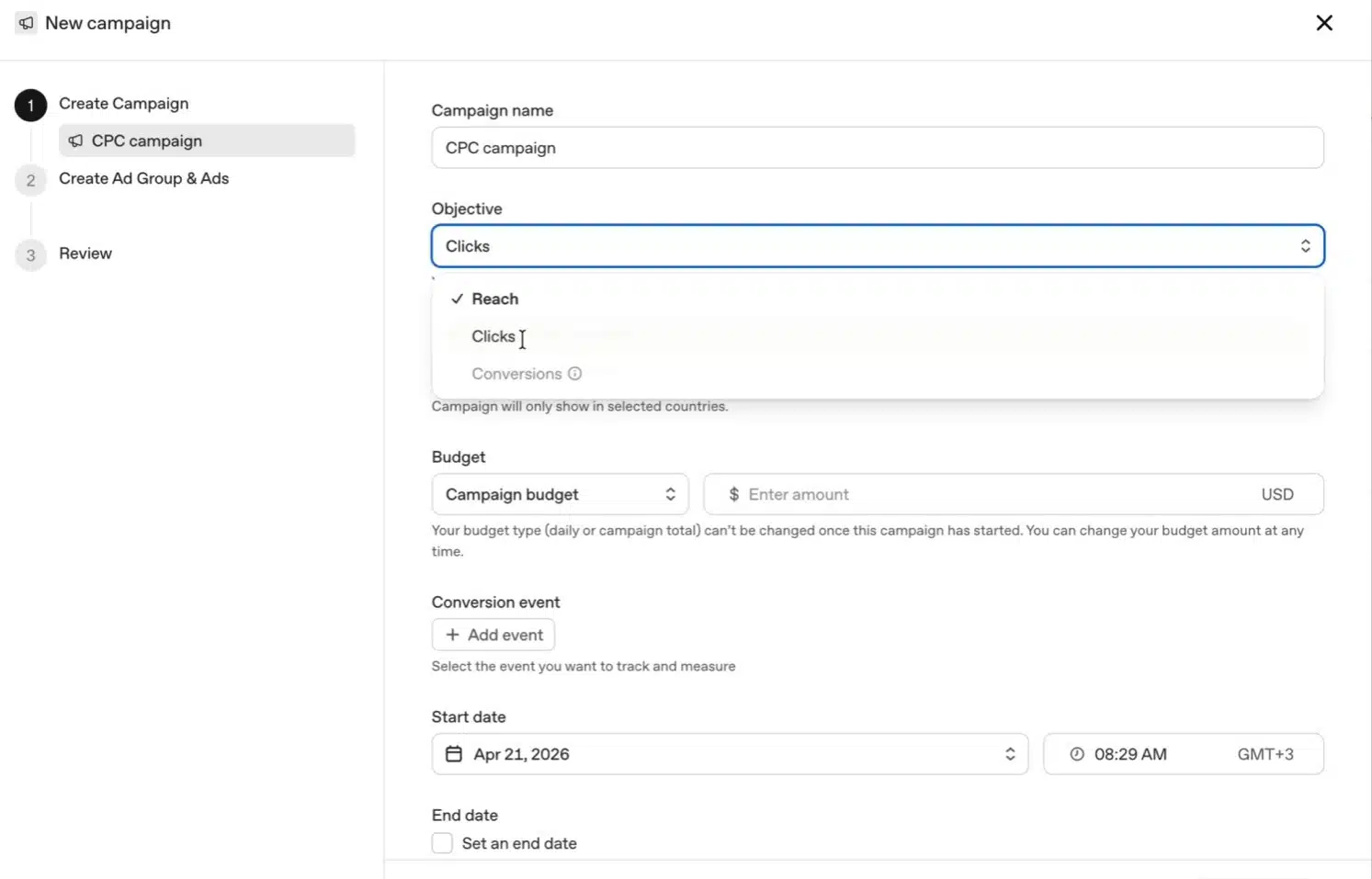

It usually doesn’t come up in the big strategy presentation. It comes up three months in, on a call with your Google Ads specialist, almost casually. “Have you thought about running competitor keywords?rdquo; The idea is simple. Bid on your competitors’ brand names. When a homeowner searches for Parker & Sons or Goettl or whoever owns your market, your ad shows up instead. You intercept the traffic. You steal the customer.
It sounds aggressive. It sounds smart. And the Google Ads setup takes about fifteen minutes.
Most owners say yes. Most owners never get the full picture of what happens after the campaign goes live.
We’ve watched this tactic deployed across trades businesses for years. We’ve seen it outperform other non-brand campaigns. We’ve also seen it quietly wreck a call center. The difference between those two outcomes has almost nothing to do with the campaign setup, and almost everything to do with what nobody told the owner before they turned it on.
This isn’t a verdict on whether you should conquest. It’s the most transparent look at what actually happens when you do, from the Quality Score math to the CSR who picks up the phone, so you can make your own call with your eyes open.
What Competitor Conquesting Actually Is (and the Question Nobody’s Asking)
The mechanics are simple. You add a competitor’s brand name as a keyword in Google Ads. When someone searches that name, your ad can appear alongside or above their organic listing. Google’s trademark policy allows this. You can bid on any keyword you want, including a competitor’s trademarked name. What you cannot do is use their name in your ad copy. That distinction matters legally, but operationally, it’s the least interesting part of this conversation.
Every article written about conquesting covers the mechanics and stops there. The legal question. The campaign structure. The pros and cons list. They treat it like a Google Ads decision.
In home services, it’s not. HomeAdvisor data suggests 83% of homeowners prefer to call when contacting a service provider. In practice, most trades owners would tell you it’s higher than that. The point is that conquesting in this industry is a phone tactic dressed up as a search tactic. The click is just the beginning. The call is where the tactic actually lives or dies.
Which means the question worth asking isn’t “should I bid on competitor keywords?rdquo; It’s “what happens to my business when I start intercepting someone else’s customers?rdquo; That’s a different conversation. And almost nobody is having it.
What Google Thinks of This (and What It Costs You)
Google isn’t neutral about conquesting. It prices it like exactly what it is: you bidding on someone else’s name with a landing page that has nothing to do with them.
Quality Score is calculated on three components: expected click-through rate, ad relevance, and landing page experience. On a competitor keyword, you lose on all three. Your ad can’t mention the competitor’s name, so relevance is inherently lower. Your landing page is about your company, not theirs. And the searcher was looking for someone else, so fewer of them will click on you. Google sees all of that, and it charges you accordingly.
In practical terms, your CPCs may be higher on competitor keywords than on your standard non-brand campaigns. How much higher, if at all, depends on your market, the competitor, and how aggressively they’re bidding on their own name. The Quality Score dynamics create a premium in most cases, but it’s not a universal rule. You’re potentially paying more per click because Google sees you as less relevant to that search. That’s not a bug in the system. It’s the system working as designed.
CTR will also be structurally lower. This is not a performance failure. It’s the nature of the tactic. The person searched for a specific company. A smaller percentage of them will click on someone else’s ad. Worth knowing so you don’t panic when you see the numbers, and so nobody spins it as a fixable optimization issue. It isn’t.
Here’s where this gets worth thinking about: CPL and CTR are the wrong scoreboard for conquesting. ROAS is.
We’ve seen conquesting ROAS outperform other non-brand campaigns when the business executes well. That surprises people. The per-click costs are higher, the CTR is lower, and the dashboard looks worse on almost every surface-level metric. But the callers who do come through and do get booked tend to be in-market, ready to buy, and less price-sensitive than someone comparing four quotes off a “near me” search. When your team is prepared and your booking rate on these calls is strong, the revenue per booked job can more than offset the higher acquisition cost. The gap between what conquesting costs per click and what a booked job is actually worth to your business is where the real question lives. Not in the Quality Score column.
What Actually Comes Through the Phone
When you bid on a competitor’s brand name, you’re not tapping into one pool of callers. You’re pulling from several, and they are very different from each other.
Warranty and service agreement callers. These people have a Trane unit that the competitor installed eighteen months ago. Something’s wrong with it. They’re calling to get it fixed under warranty. Your CSR picks up and has no record of the install, no idea what system is in the house, and no way to honor a warranty they didn’t issue. The call ends with the homeowner confused and your CSR apologizing.
Callbacks on open estimates or jobs. The caller got a quote from the competitor last Tuesday. They’re calling back to schedule. They may want to negotiate the price. They have a conversation in progress with another company, and you’re a stranger walking into the middle of it.
Membership and loyalty callers. They pay a monthly fee. They’ve been with the competitor for years. They have a relationship, a maintenance history, maybe a favorite tech who comes out every spring. These callers know exactly who they dialed, and they are not shopping.
New or recent customers who just remembered a name. This is the bucket that matters. Their AC broke this morning. They saw a truck wrap on the I-10 two weeks ago. They search the name they half-remember, your ad shows up first, they click, they call. They don’t have deep loyalty. They don’t have a warranty. They don’t have an open estimate. They just need a problem solved. If your CSR answers well, books the call, and sends a tech, the homeowner gets their AC fixed and you get a new customer. No harm done.
The ratio between these buckets is everything. And it varies wildly depending on which competitor you target. A newer company with limited installed base and few service agreements will produce more of the convertible calls. An established company with 10,000 members and twenty years of installs will produce more of the unconvertible ones. Choosing which competitor to conquest is as important as choosing whether to conquest at all.
What It Feels Like on the Ground
No agency deck covers this part.
Your CSR answers a conquest call. The person on the other end asks about a warranty on a system your company didn’t install. Your CSR stammers. “I think you might have the wrong number.” The caller is irritated. The CSR hangs up, a little rattled. The next three calls they take sound slightly less confident. Slightly less warm. That’s a cost that doesn’t show up in any dashboard.
Your tech pulls up to a house. The homeowner opens the door, looks at the truck, and says “I called Parker & Sons.” Your tech is standing there in the wrong uniform. The job is over before the toolbag comes off the truck. That tech drives to the next call carrying the weight of an interaction that felt off, even though it wasn’t their fault.
The homeowner just wanted their AC fixed. They searched a name, clicked a link, called a number. Now they’re not sure who they called or whether they can trust whoever shows up. Their first experience of your brand is confusion.
None of these scenarios are reasons to avoid conquesting. They are reasons to prepare for it. The businesses that get wrecked by this tactic are the ones where nobody mentioned these scenarios before the campaign went live. The businesses that succeed with it are the ones that trained for exactly this.
Why It Usually Fails, and Why It Works When It Works
The failure pattern is almost always the same.
The agency builds the campaign. Separate ad group, competitor keywords, tracking number. Good technical setup. Campaign goes live on a Monday. By Wednesday, the CSRs are fielding calls that don’t make sense. Callers asking about warranties they can’t find. Callers asking for a company name that isn’t theirs. Nobody told the call center this was coming. Nobody adjusted the greeting. Nobody set up call labeling or whisper messages. The CSRs start telling callers they have the wrong number, because from their perspective, they do.
By week two, the owner is frustrated. CSRs are complaining. The campaign gets paused. The agency writes it off as “low intent traffic” in the next report.
The real problem was never the traffic. It was zero preparation on the operations side.
The success pattern is almost always the same too.
Calls come in labeled “conquest” via a whisper message or ServiceTitan campaign tagging. The CSR knows what they’re picking up before they say a word. The greeting is non-branded: “Hi there, it’s a great day to fix your heating and air, how can I help you today?rdquo; Not “Thanks for calling Russo Mechanical.”
Early in the call, the CSR listens. If the caller mentions a warranty, a membership, or a prior job with another company, the CSR handles it gracefully: “It sounds like you may be looking for [competitor name]. Let me get you pointed in the right direction.” That costs nothing and earns goodwill the caller won’t forget.
If the caller just needs a problem solved and doesn’t have deep ties to the competitor, the CSR books it like any other call. A tech shows up. The AC gets fixed. A new customer relationship begins.
The owner knew ahead of time that not every call would book. That’s factored into the economics, not treated as evidence the campaign “isn’t working.” The difference between failure and success here is not the tactic. It’s whether marketing and operations actually talked to each other before the first call came in.
If You Decide to Try It, Here’s the Execution Checklist
The campaign setup is the easy part. Your agency already knows how to do it.
Separate campaign. Separate tracking number. Exact or phrase match on competitor brand names, not broad match. Ad copy that leads with your value proposition without mentioning the competitor. A dedicated landing page that makes the case for your company without referencing who the searcher was looking for. Standard stuff.
Here’s the part your agency probably won’t mention.
Label every conquest call. Use campaign source tagging in ServiceTitan or whatever CRM you run so that conquest calls are identifiable before and after the call. If your system supports whisper messages, set one up so your CSR hears “conquest call” before the caller connects. That two-second heads-up changes everything.
Write a non-branded greeting and train your CSRs on it. Post it at every station. Something warm and service-forward that doesn’t include your company name. “Hi there, thanks for calling, how can I help you today?rdquo; works. Practice it until it sounds natural, not scripted.
Build a screening protocol. If the caller mentions a warranty, a membership, a specific prior appointment, or a named technician from the competitor, the CSR releases them politely. “It sounds like you’re looking for [competitor name], let me get you their number.” That one sentence costs you nothing and turns a potentially negative experience into a moment of goodwill.
Align marketing and operations before launch day. Not after the first confused caller hits the board. The dispatcher knows. The CSR supervisor knows. The owner knows what the call mix will look like and what a realistic booking rate on these calls is. Nobody is surprised.
Give it 60 to 90 days with clean data before you judge it. Evaluate on cost-per-booked-job, not CPL, not CTR. Those metrics will look worse than your other campaigns. That’s structural. The question is whether the jobs you do book are worth what you paid to get them.
The Retaliation Question
This is worth thinking through before you start.
Conquesting is not a one-way tactic. Your competitors can see you in auction insights. They can simply search their own name, which they do, and notice your ad sitting above their listing. Some will shrug. Some will call their agency that afternoon.
If they retaliate by bidding on your brand name, your branded search costs go up. Branded search is typically the cheapest, highest-converting campaign type you run. A bidding war on your own name is a real cost, even if it’s not a catastrophic one.
If you’re already running brand defense, meaning you bid on your own name, you’re insulated. If you’re not, you’re exposed whether or not you conquest. Worth fixing either way.
The practical question: is the competitor you’re targeting the kind of operation that will notice and respond? A large franchise with a sophisticated agency and an attentive account manager will retaliate within weeks. A local owner-operator running things off the back of a truck probably won’t notice for months, if ever.
Not a reason to avoid conquesting. A reason to think about it before you start, not after.
The Ethics of Intercepting Someone Else’s Customers
There’s a version of this that feels completely clean.
A homeowner’s AC dies on a Tuesday afternoon in July. They half-remember a name from a truck wrap they saw on the highway. They search it. Your ad appears. They call. Your CSR answers warmly, doesn’t pretend to be anyone else, books the call. A tech shows up, diagnoses the issue, fixes it. The homeowner doesn’t care whose truck is in the driveway. They care that their house is cool again.
You gave someone an option at the moment they needed one. That’s legitimate service.
There’s a version that feels less clean.
A homeowner has a relationship with a company. They’re calling about a system that company installed, about a warranty that company issued, about a membership they pay for every month. They end up on the phone with a stranger who can’t help them. That’s not service. That’s confusion dressed up as a lead.
The line between those two scenarios is not the Google Ads campaign. The campaign is identical in both cases. The line is how your people handle the call. Whether your CSR can tell the difference between someone who’s shopping and someone who has a relationship. Whether you trained them to tell the difference. Whether you care enough to let the unconvertible calls go gracefully instead of trying to book everything that rings.
Google allows conquesting. The law allows it. But “allowed” and “right” aren’t the same question, and the owners who do this well are the ones who answer both.
The tactic is neutral. How you execute it is the ethics. And that’s a decision you make before you spend a dollar.