

SEO has a habit of becoming repetitive.
Publish a few blogs each month. Build a few backlinks. Track rankings. Repeat. For a while, that approach works. Then one day it doesn’t. Traffic flattens. Rankings stall. And despite “doing SEO,” progress slows.
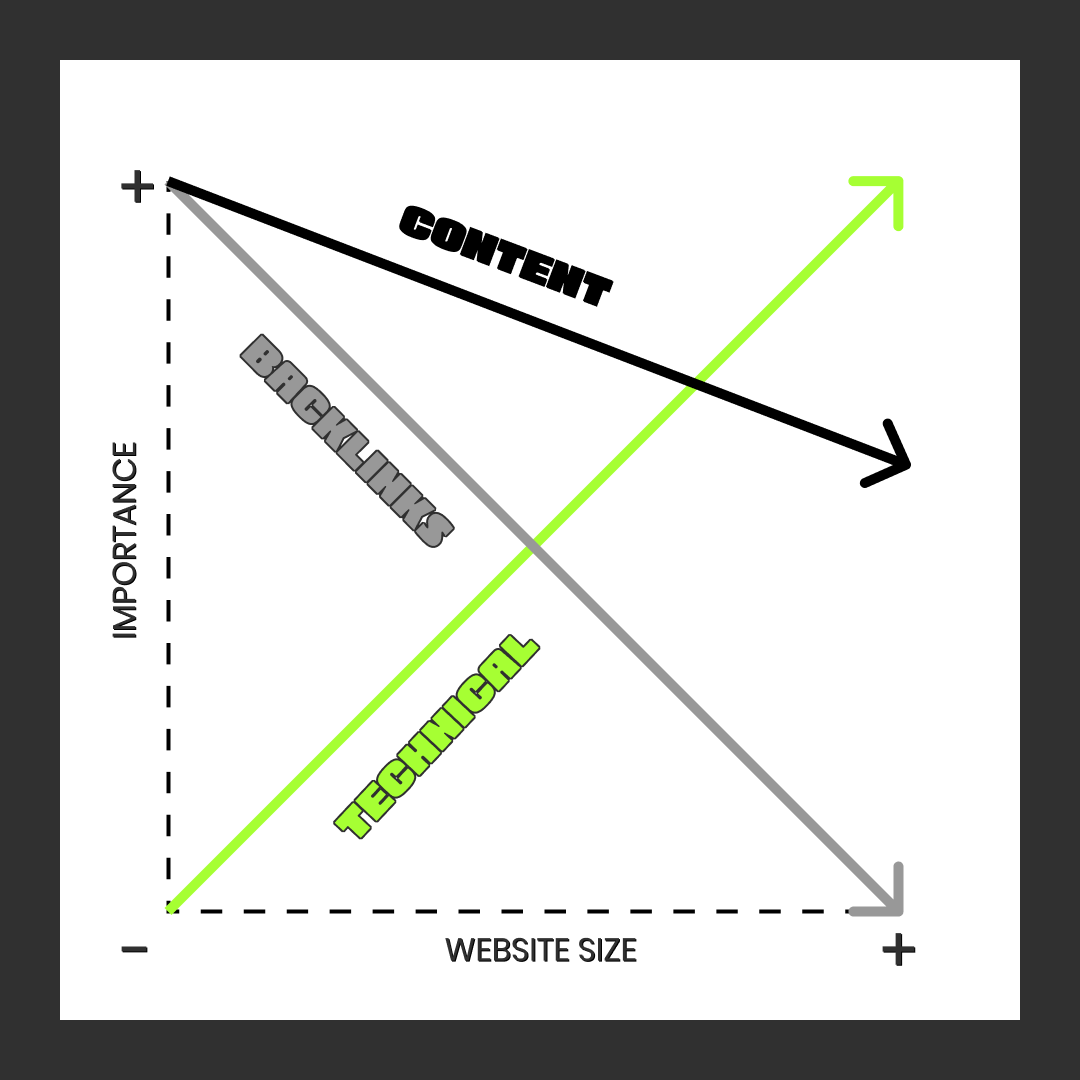
The issue usually is not effort. It’s that SEO priorities change as a website grows, yet most strategies never evolve past their early-stage playbook.
That matters even more in 2025, when AI-driven search platforms are shaping how brands get surfaced, summarized, and recommended. What helps a small site gain traction often does very little for a larger one.
Key Takeaways
- SEO priorities should change as your website grows. What works for a small site often delivers diminishing returns for a larger one.
- Early-stage SEO should focus on building strong service, location, and service-area pages to establish relevance and coverage.
- As a site matures, publishing more content becomes less effective than improving structure, internal linking, and technical SEO.
- High-quality backlinks and digital PR matter more for authority and AI search visibility than link volume alone.
- Refreshing and optimizing existing content often produces better results than constantly creating new pages.
- In an AI-driven search landscape, clear structure, entity authority, and technical clarity are critical for long-term visibility.
SEO Works in Phases, Not Checklists
Early SEO success is driven by relevance. Search engines need to understand what a business does, where it operates, and how it fits within a broader topic space.
For home service companies, that foundation usually includes:
- Clearly defined core service pages
- Pages for every city or region served
- Service-plus-location pages that capture high-intent searches
This content creates the basic map search engines and AI systems rely on. Without it, nothing else matters. At this stage, publishing content and earning backlinks produces clear gains. Visibility increases, rankings improve, and momentum builds.
The mistake most teams make is assuming this phase never ends.
Why More Content Eventually Stops Delivering
Once a site reaches a certain size, content stops being the main constraint. Coverage already exists. Additional pages expand volume, but not clarity.
At that point, new content often:
- Competes with existing pages
- Dilutes internal authority
- Consumes crawl budget without adding signal strength
The result is diminishing returns. Publishing another blog post no longer produces the lift it once did, even if the content itself is good. The strategy has to shift, not because content is bad, but because the website has outgrown a content-first mindset.
Backlinks, Authority, and Digital PR
Backlinks still matter, but how they matter has changed.
Links today are less about quantity and more about authority, relevance, and brand context. A single mention from a respected publication or industry outlet often carries more value than dozens of generic links.
That is why digital PR has become more important than traditional link building. Digital PR does not just earn links. It places a brand into authoritative conversations and trusted ecosystems.
For AI search platforms, this matters even more. These systems rely heavily on entity recognition and source credibility. Being referenced alongside other trusted brands helps establish who should be included in generated answers.
Related article: Google Discusses Digital PR Impact on AI Recommendations
When Technical SEO Becomes the Growth Lever
As websites grow, structure becomes more important than expansion.
Larger sites demand stronger technical foundations. Crawl efficiency, page relationships, performance, and structured data all play a larger role in how search engines and AI systems interpret the site.
One of the most undervalued aspects of this phase is internal linking. Internal links help distribute authority, clarify topical relationships, and signal which pages matter most. On mature websites, improving internal linking often delivers more impact than publishing new pages because it strengthens content that already exists.
This is also where SEO starts to look less like publishing and more like engineering.
Refreshing Content Instead of Replacing It
Another important shift is moving from content creation to content optimization.
Refreshing existing pages often outperforms publishing new ones. Updates can include:
- Improving structure and clarity
- Expanding depth where needed
- Strengthening entity language
- Updating outdated information
- Adding or refining structured data
AI-driven search favors clarity and completeness. Pages that clearly define topics, reinforce entities, and demonstrate expertise are easier for AI systems to trust and reference. Refreshing content strengthens those signals without making the site larger or more complex.
Why This Matters in an AI-First Search Environment
Search is no longer just about rankings and clicks. Increasingly, users receive answers directly within AI interfaces that summarize information and cite sources.
In that environment, visibility is earned through authority and structure, not volume. Sites that are technically sound, internally connected, and consistently optimized are easier for AI systems to understand and rely on.
SEO strategies built purely around publishing schedules and link counts are becoming less effective. The advantage now goes to brands that treat SEO as an evolving system.
The Real Priority Shift
SEO success depends on knowing when to change focus.
Early on, content and foundational backlinks drive growth. As the site matures, technical optimization, internal linking, and content refinement become the primary levers. At scale, authority, entity clarity, and structural efficiency determine whether a brand continues to gain visibility or slowly fades.
The work does not stop. It simply changes.
Understanding that evolution is the difference between maintaining SEO activity and actually building long-term search advantage.
The Bottom Line
SEO is not about doing more work forever. It is about doing the right work at the right stage of growth. Early success comes from building relevance through strong service, location, and foundational content. Long-term success comes from structure, authority, and refinement.
As websites scale, the advantage shifts away from publishing volume and toward technical clarity, internal connections, and trusted signals across the web. In an AI-driven search environment, brands that adapt their SEO priorities over time are the ones that continue to show up, get referenced, and earn trust. The websites that don’t evolve may keep producing content, but they stop producing results.
Understanding when to change focus is what separates sustained visibility from stalled growth.
And if it’s not obvious already, you can read more about why Rival is a preferred partner of Free Agency here.
This article was written in collaboration with Eric Thomas, Founder of Rival Digital, a digital marketing agency specializing in SEO, website strategy, digital PR, and local search for home service businesses. Eric works closely with growing brands to help them understand how SEO priorities should evolve as websites scale, especially in an increasingly AI-driven search landscape.