
An article written by our friend Yossi Wachtel, Founder & President of Monkey Wrench Plumbing, Heating, Air & Electric, whose stories we liked so much, we asked to be a contributor for Free Advice Fridays. Without further ado:
If you read my recent LinkedIn post, or are a big reader, you’ve probably heard about the $2,000 rule by now.
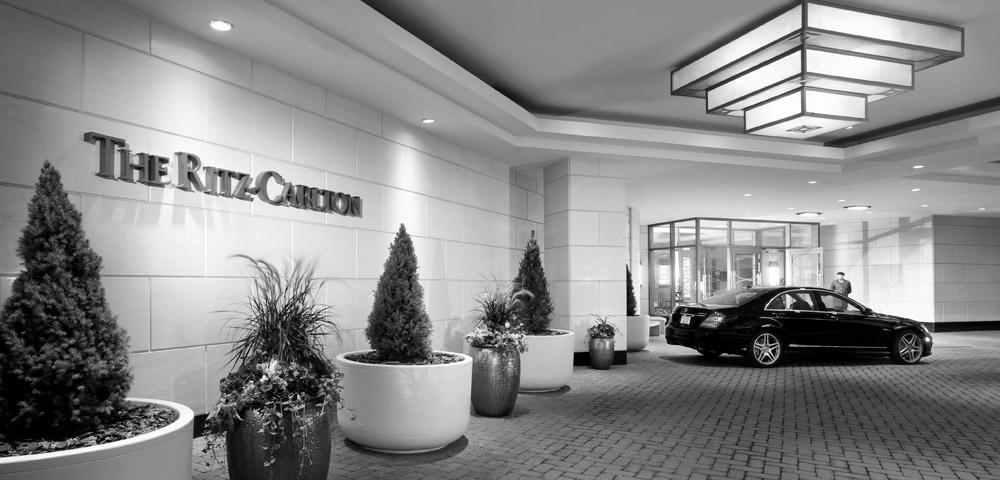
The Ritz-Carlton’s famous policy, where every employee is authorized to spend up to $2,000 per guest to solve a problem or create a memorable experience. No manager needed. No form to fill out.
When I first heard this, I thought:” Now there’s a hotel company with loose budgets and rich guests.” Nice story, not my world.
But when I started reading about how it actually works I realized something else. It’s actually just good business, and we should do that too.
Here’s why:
The Math They Don’t Put in the Media
What most people leave out when they tell the $2,000 story is that the average Ritz-Carlton guest spends $250,000 with the company over their lifetime. So when you think about it, $2,000 isn’t charity. It’s not even really generosity. It’s ROI math.
Now, when you flip that to home services. There isn’t even a home owner on earth that will spend even close to that amount. A loyal customer is worth, on average, about $500 a year from HVAC tune-ups, plumbing calls, duct cleanings, and emergencies. Hopefully, they’ll also call you for new equipment when they need it. Over ten years, a customer like that could be worth around $25,000. One who refers you to neighbors? $75,000. Referrals who stay loyal? You can do the arithmetic yourself.
But customer spending between the Ritz and a plumbing company doesn’t prove that what the Ritz is doing is something you can’t do. It just proves that you need to work with less money. The $2,000 rule isn’t about the money. It’s about protecting a relationship with your customers because protecting relationships is almost always cheaper than losing one.
So instead of $2000, you give your team a budget of $100 or $25. You’d be surprised how big of an impact you can make with a little.
The Giraffe, the Eggs, and the Carpenter
But there is another element to the Ritz’s $2000 policy. And that’s the story it helps create. Amazing stories of staff using this money to do amazing, beyond service-type things for guests.
A few of those stories have become famous, and they’re worth repeating:
A family staying at the Ritz in Bali had a son with severe food allergies. They’d brought specialized eggs and milk from home. The eggs broke in transit. The milk spoiled. The hotel staff searched the entire town. Nothing. So the executive chef called his mother-in-law, not an employee, just a person who cared, and she flew the items in from Singapore, over a thousand miles away.
Another little boy left his stuffed giraffe, Joshie, behind at the Ritz in Amelia Island. His dad called the hotel and asked them to ship it back, telling his son that Joshie was just taking a few extra vacation days. The hotel staff didn’t just mail the giraffe. They photographed him by the pool, getting a spa treatment, driving a golf cart, and making friends at the bar. They sent a photo album home with the toy.
At the Ritz-Carlton Dubai, a manager and a staff carpenter built a wooden ramp by hand so a wheelchair-bound guest could get from the hotel to the beach, dine at the water’s edge, and watch the sunset.
Now, these stories are obviously cherished and talked about by guests. But the Ritz also uses these stories in what it calls the Daily Lineup, a 15-minute meeting held every morning at every property around the world before every single shift. Kind of like our morning huddle.
The Daily Line Up is held every morning at the Ritz. It is not optional. It’s also not a status update. It’s a meeting specifically structured: around a few minutes of company news, local news, and the sharing of a “Wow story.” A real story, from the week, of someone on the team who did something that made a guest’s day.
The point isn’t the story itself. The point is that repeating those stories shapes what people think is normal. It creates a standard by example, not by a rulebook.
At Monkey Wrench, we’ve started doing something similar. When a tech goes the extra mile, helps an elderly homeowner move furniture back after a repair, notices a carbon monoxide issue that wasn’t on the work order, texts a follow-up photo to show the repair, we talk about it. We name it. We tell the team.
You may have noticed something else.
None of those stories cost anywhere near $2,000. In fact, most of them cost almost nothing except for attention, presence and the willingness to notice something that wasn’t on the job description and act on it anyway.
We’re in the Hospitality Business too. Except It’s in Reverse.
It may seem strange for a trade business or a plumber to talk about hospitality. But it’s actually not strange. It’s just, as the CEO of Nexstar, Julian Scadden, points out, that happens in reverse.
For the Ritz-Carlton, hospitality is about making guests feel comfortable in its hotels and on its properties. That’s conventional hospitality.
What we do is the trades are the inverse. Our job is not to make home owners feel comfortable in our offices or vans. Our job is to make home owners feel comfortable in their own homes. Think about it,
A stranger, our technician, walks into someone’s home. Maybe into their bedroom, maybe, their master bathroom. They’re in there with your stuff, your family, your dog.
That is an enormously vulnerable thing to allow. And most homeowners agree to it while stressed, because something broke. They’re already in a bad mood when you show up.
Which is why if we don’t meet that moment with intentional hospitality, we’ve failed before we’ve opened the tool bag.
The Ritz has a motto: “Ladies and Gentlemen serving Ladies and Gentlemen.”
It’s a reminder that the person giving the service is just as much of a professional as the person receiving it.
At Monkey Wrench, we have a similar motto: People who live in places serving people who live in places.”
Worth thinking about when you’re deciding how to present your techs to the world.
Two Reasons This Matters More Right Now Than It Ever Has
#1 The robots are actually coming. Julian Scadden, the CEO of Nexstar, talks about this a lot. Especially when he teaches about the importance of hospitality in the trades. I know everyone says that the best job in the age of AI is to be a plumber. And I know what I am about to say sounds like a punchline, but I think it’s only a matter of time before a robot can fix a leaky toilet. But what a robot cannot do is look a 74-year-old woman in the eye after a frightening pipe burst, explain what happened in plain language, and make her feel genuinely safe in her own home. There will always be a customer who wants that. Who will pay a real premium for it? The question is whether your company is positioned to be that option.
#2 Private equity is eating the trades. Monkey Wrench is family-owned. But we’ve grown enough that people sometimes assume we’re backed by a firm. That assumption doesn’t bother me. What it tells me is that independent operators have to work harder to prove they’re different. PE firms are good at scale. They’re not good at making someone feel like a neighbor instead of a transaction. That’s the gap. And if you’re an independent operator reading this, that gap is yours to own. Especially when the competition values EBITDA over people, they make it easy to be exceptional with a little extra effort.
So What Do You Actually Do With This?
You don’t need a $2,000 budget per customer or $100 or $25. All you need is an honest answer to a simple question:
Does every person on my team understand that their job is to make someone feel safe and respected in their own home, and that fixing the pipe is how we earn the right to do that?
Start there.
Instead of money, make sure everyone on your team has shoe covers.
Then make sure they write the follow-up text.
Schedule daily morning meetings. Make sure you talk about these things in the morning meeting. And tell the best stories out loud.
The Ritz didn’t build their culture with a single policy. They built it one Wow story at a time, repeated every morning, until it became the only way they knew how to work.
The Ritz-Carlton doesn’t win because it has prettier rooms than everyone else; in fact, I’ve stayed at a bunch, and they’re kind of just okay. It wins because it has built a culture where every single person, from ownership to the newest front desk hire, understands that the experience is the product. The room is just the room.
In-home services: the repair is just the repair. Most people can fix a leaky pipe just as well as you can. But that’s not why they hire you again… if they hire you again.

Yossi Wachtel
Founder & President, Monkey Wrench Plumbing, Heating, Air & Electric